The installation at The Bank of Split (Splitska banka), Tudić creates a philosophical dialogue between opposing forces through the strategic placement of an inverted wooden boat suspended from the skylight and a see-saw positioned on the floor below. This vertical arrangement establishes a compelling axis that transforms the bank's interior from a mere functional space into a contemplative environment. The suspended vessel—rendered decorative rather than functional—creates a visual paradox that disrupts our perception of both the object and its institutional context, inviting reflection on equilibrium, navigation, and the precarious balance of contemporary economic relationships.
This work forms part of Tudić's broader philosophical investigation into systems of perception, authority, and freedom. The work extends beyond aesthetics to examine how similar limiting frameworks operate in politics, technology, and science—domains where we mechanically adopt established determinations without questioning their origins or necessity.
Blurring the line between ritual and satire, “Brainwashing” questions the mechanisms of obedience, surveillance, and ideological conformity. The performance invites the audience to reflect on the nature of control—who enforces it, who submits to it, and whether true autonomy can exist within such a framework. Tudić's work resonates with themes of power, resistance, and transformation, ultimately suggesting that no system, however rigid, is immune to decay and subversion.
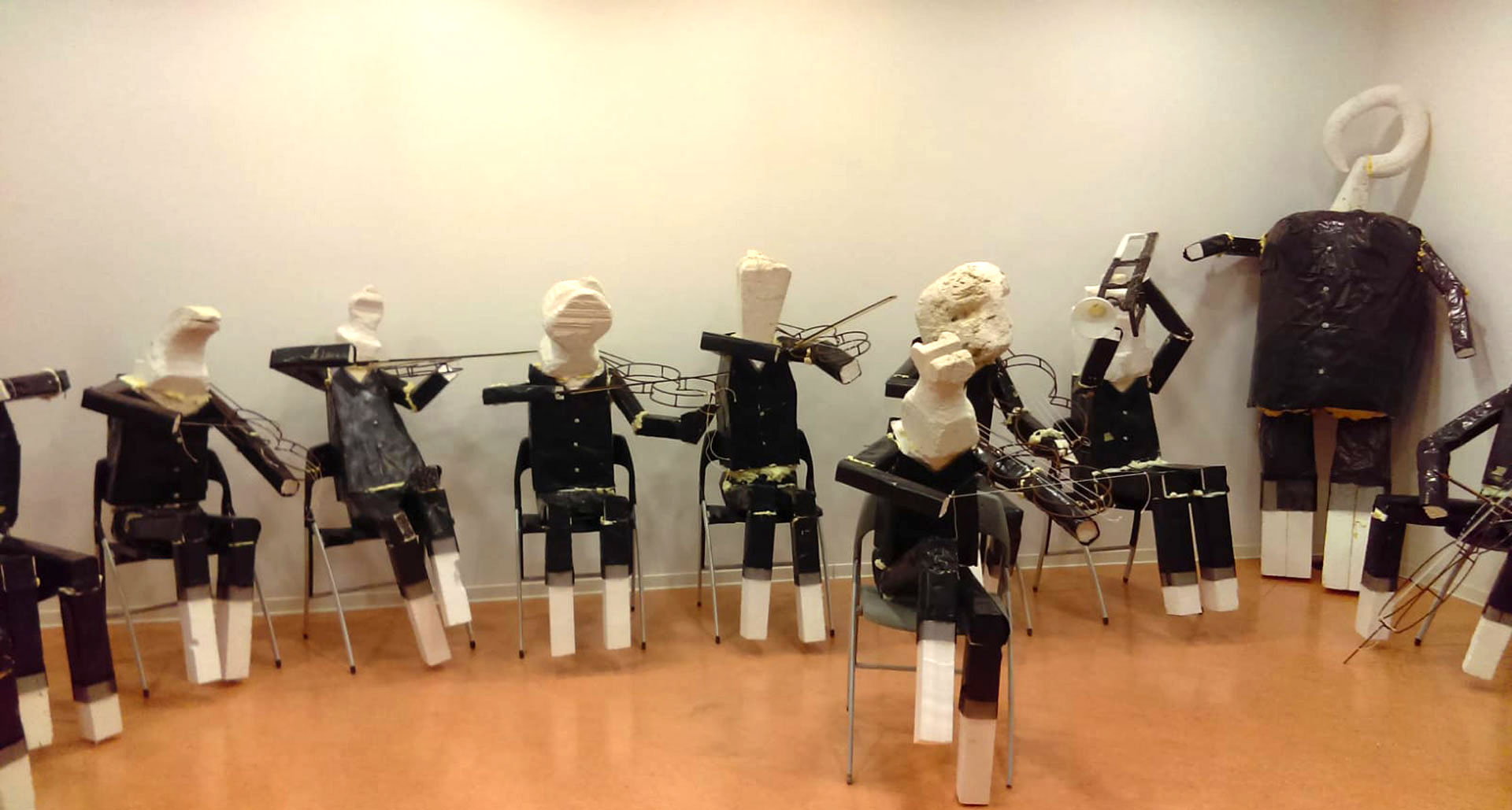
"Od glave do tjemena" (From Head to Crown) transforms the Šibenik City Library into a philosophical landscape through fragmented anthropomorphic figures crafted from styrofoam and black nylon. Tudić's installation creates a physical manifestation of philosophical dualities—body and mind, part and whole, inner and outer—inviting viewers to navigate the tensions between completeness and fragmentation. The scattered yet harmonious arrangement of forms evokes both Hegelian dialectics and Nietzschean dynamic tension, while the progression suggested in the title implies both a circular journey and hierarchical ascension of consciousness. Through this work, Tudić continues his exploration of harmonizing apparent disharmony within a distinctly materialized philosophical inquiry.
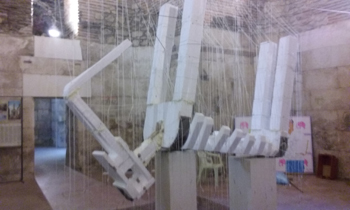
This contemporary artwork belongs to Tudić's philosophical investigation into perception and meaning. This series transforms abandoned industrial spaces into conceptual environments where familiar objects become vehicles for exploring Hegelian dialectics.
This series visually interprets the relationships between consciousness, existence, and universality. It responds to Descartes' "Cogito, ergo sum" by questioning whether individual awareness truly precedes broader existence. Tudić's installation suggests that pure Being exists independently, unconditioned by particular entities.
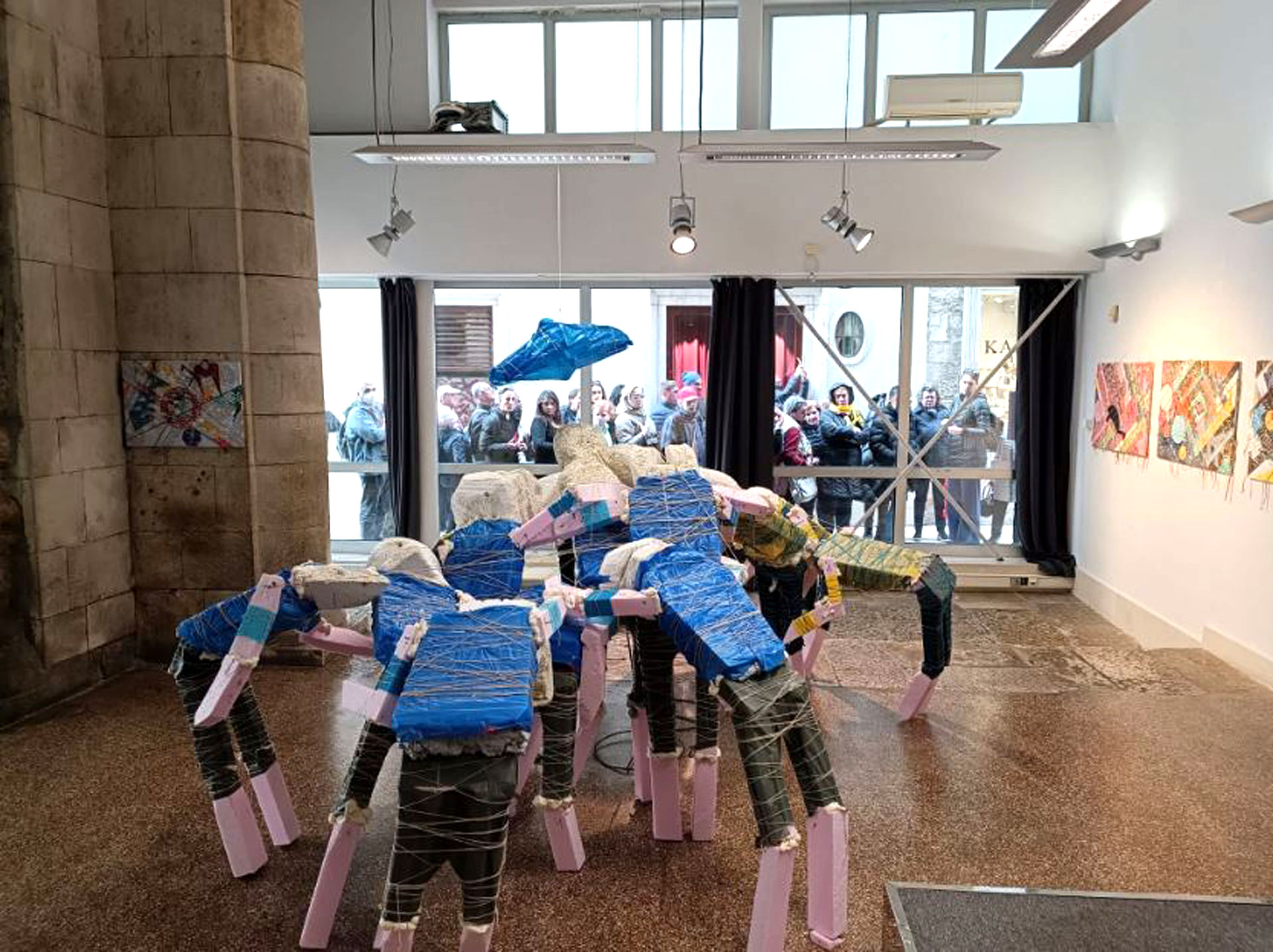
The "Journey" installation examines self-understanding through our connections to others alongside our struggle to grasp unity. Tudić contrasts the certainty of personal existence with ongoing growth and change, revealing how competition exposes the limits of our comprehension. Drawing inspiration from rugby, he suggests that meaningful development comes through challenge rather than destruction, guiding visitors beyond binary thinking toward more comprehensive perspectives.