
Untitled
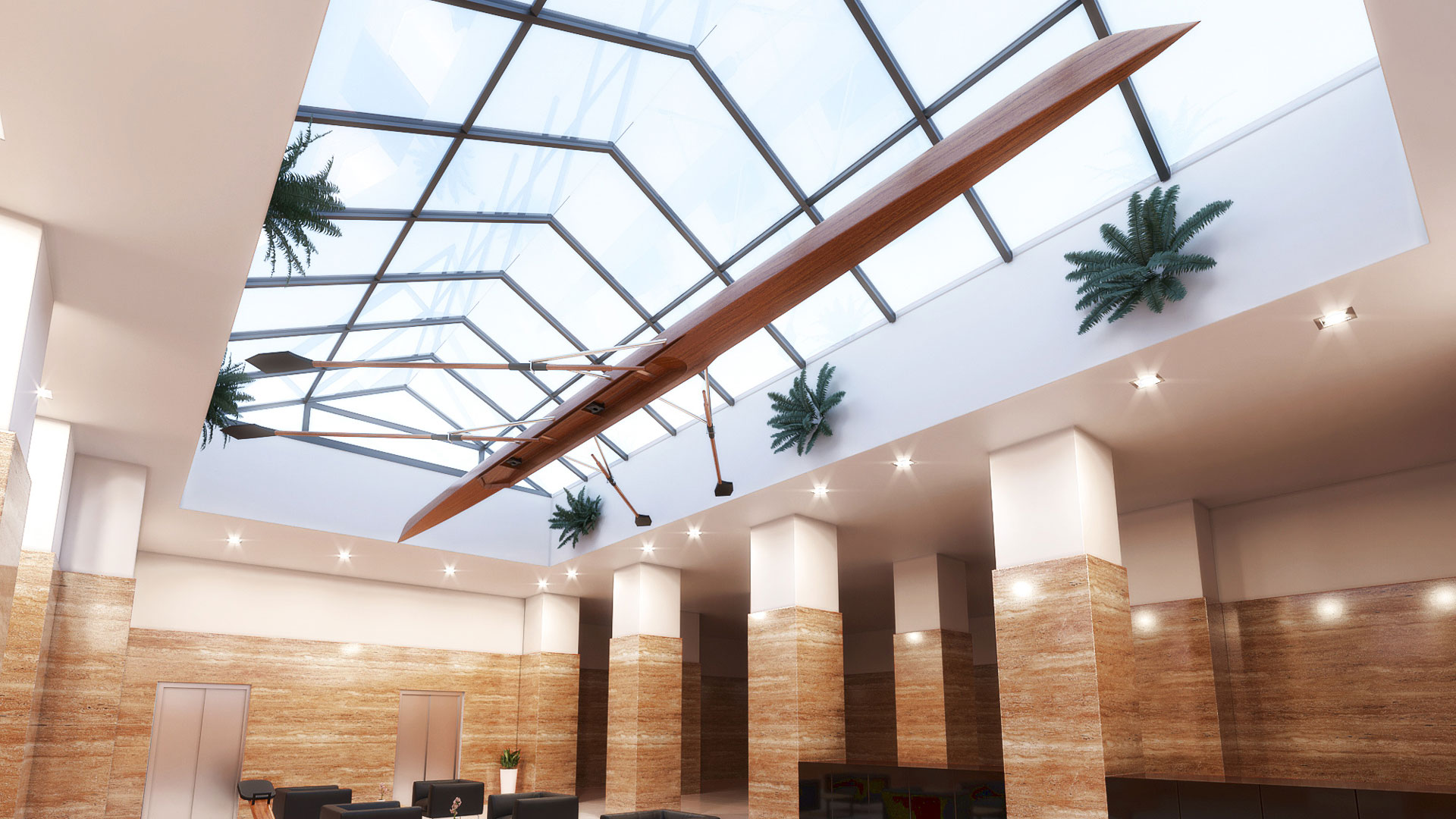
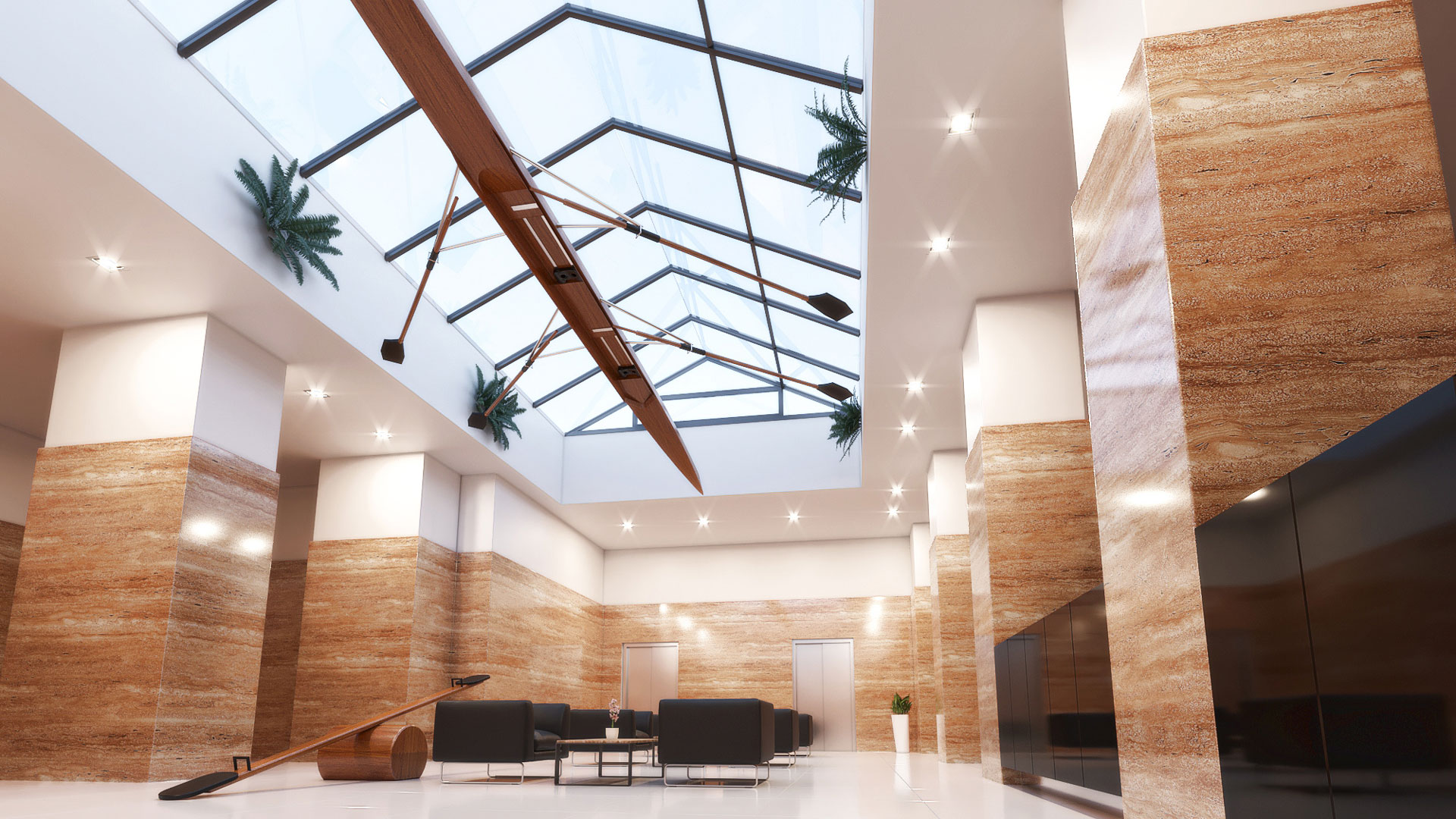
In this striking site-specific installation at Splitska banka, Neven Tudić creates a profound philosophical dialogue between opposing forces—elevation and gravity, movement and stasis, natural form and constructed environment. The centerpiece—a wooden canoe/rowboat suspended from the skylight—functions as both literal and metaphorical inversion. By hanging the boat upside-down, Tudić subverts its inherent functionality, transforming a vessel designed for horizontal movement across water into a static sculptural element suspended in air. This inversion creates a powerful visual paradox that disrupts our habitual perception of both the object and the architectural space.
The relationship between the suspended boat and the see-saw on the floor establishes a compelling vertical axis that encourages viewers to look both upward and downward, creating what phenomenologists might call an “embodied viewing experience.” The see-saw—itself an object of precarious balance and reciprocal movement—contrasts with the fixed suspension of the boat above. This pairing suggests multiple philosophical readings: perhaps a commentary on the banking system’s balance of risk and stability, or a broader meditation on equilibrium and disequilibrium in contemporary life. The polished travertine walls and modern furnishings of the bank create a particularly potent context for these wooden elements, juxtaposing organic materials against the institution’s corporate aesthetic.
The installation’s positioning within a bank—a space of financial transaction and security—adds another layer of meaningful tension. Banks represent stability and permanence, while boats suggest journey and transition. By suspending a vessel designed for movement within this institutional architecture, Tudić creates a powerful statement about contemporary existence—perhaps suggesting that our navigational tools have become decorative rather than functional in the modern economic system. The see-saw below further emphasizes this theme of precarious balance in commercial relationships. Through this thoughtful intervention, Tudić transforms the bank’s interior from a mere functional space into a contemplative environment that invites visitors to reconsider their relationship to both financial institutions and navigational metaphors in contemporary life…


