
Series 1
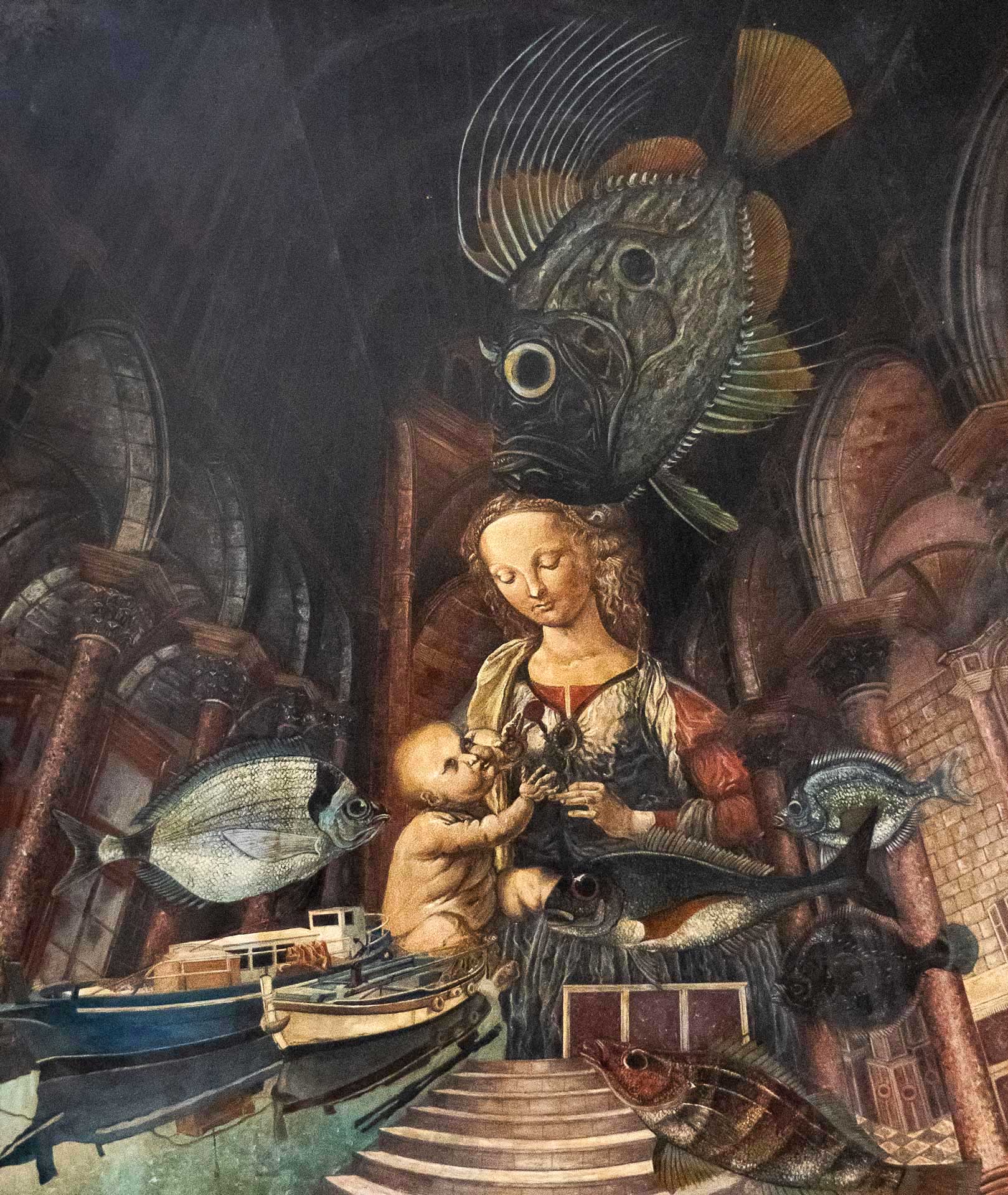
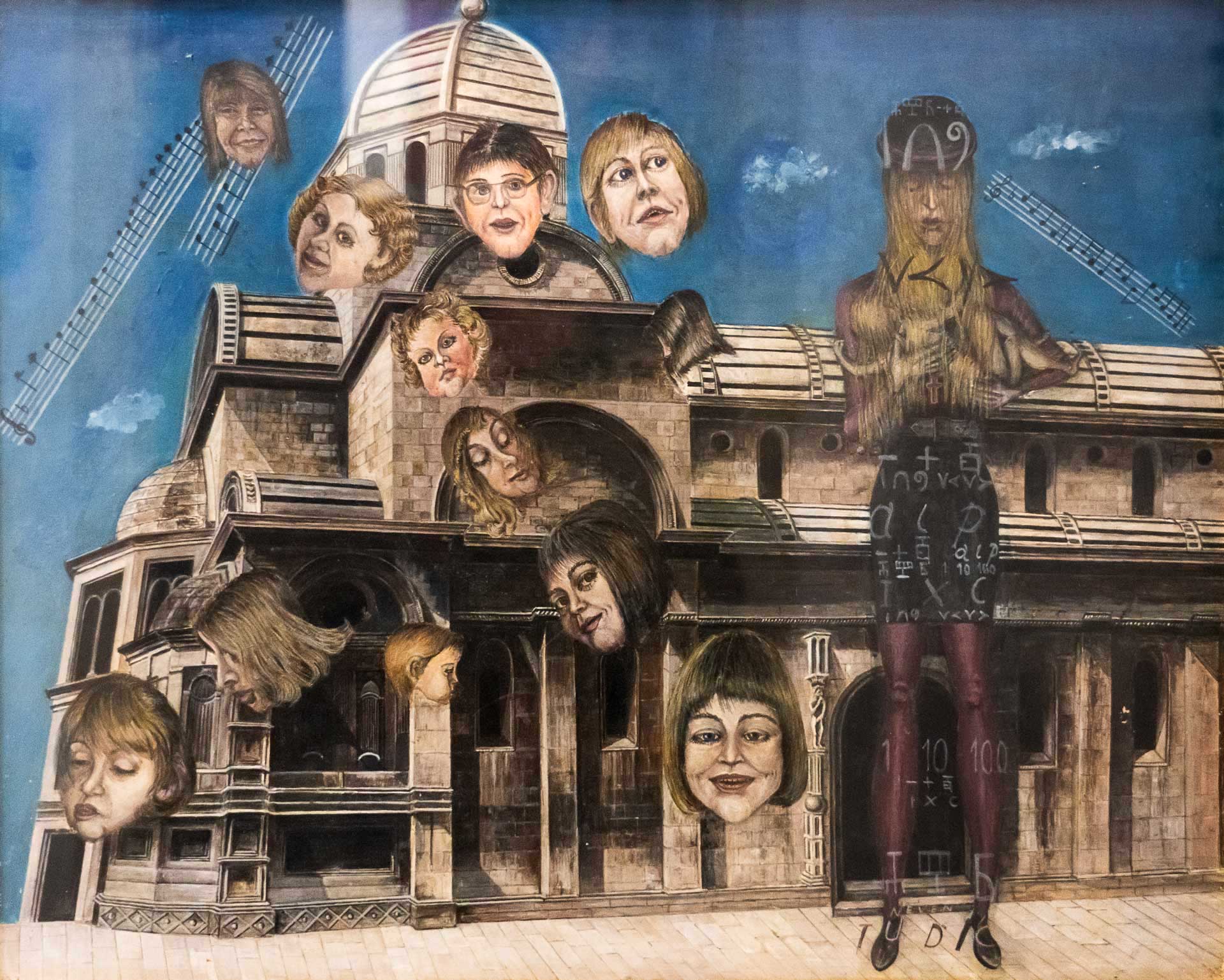
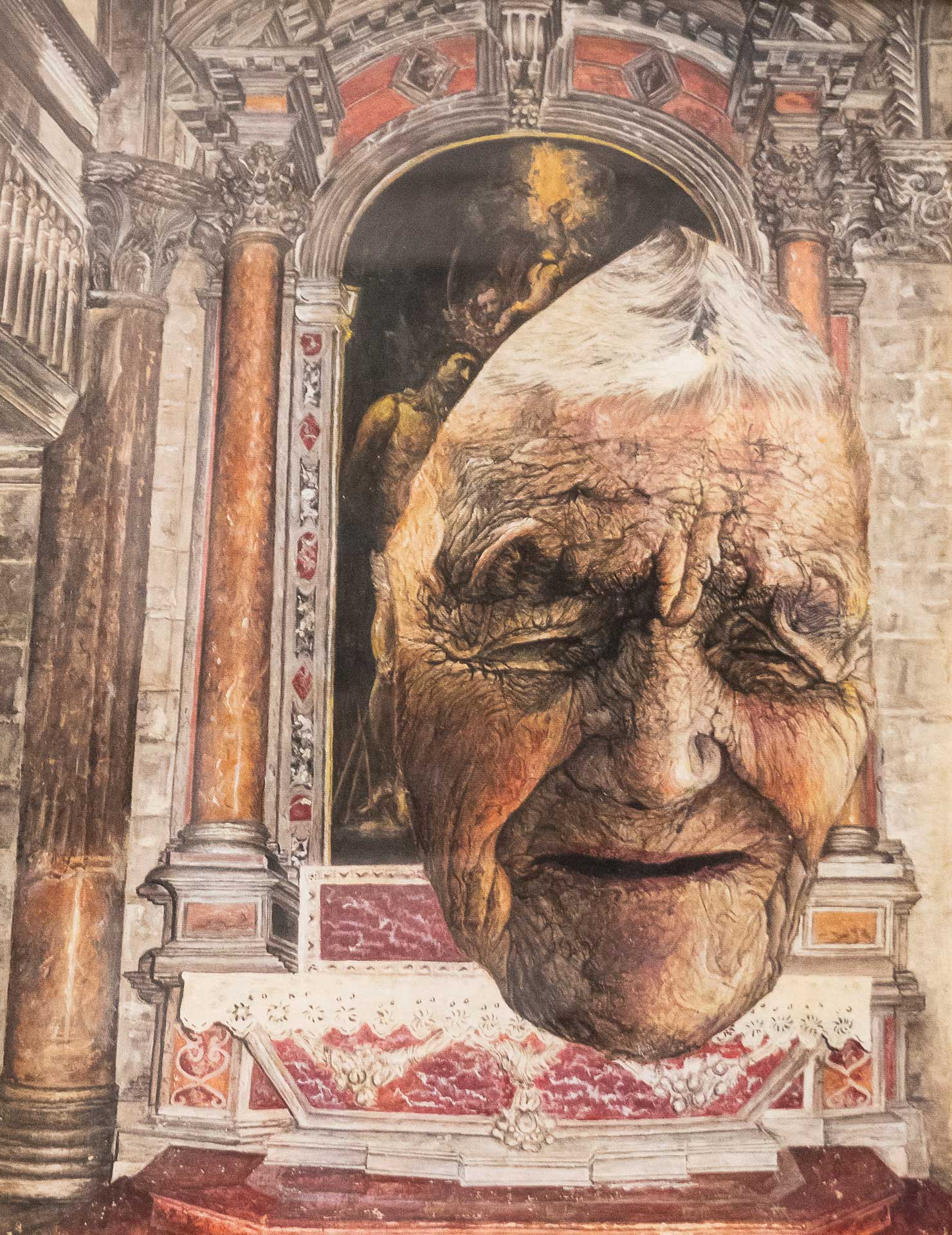
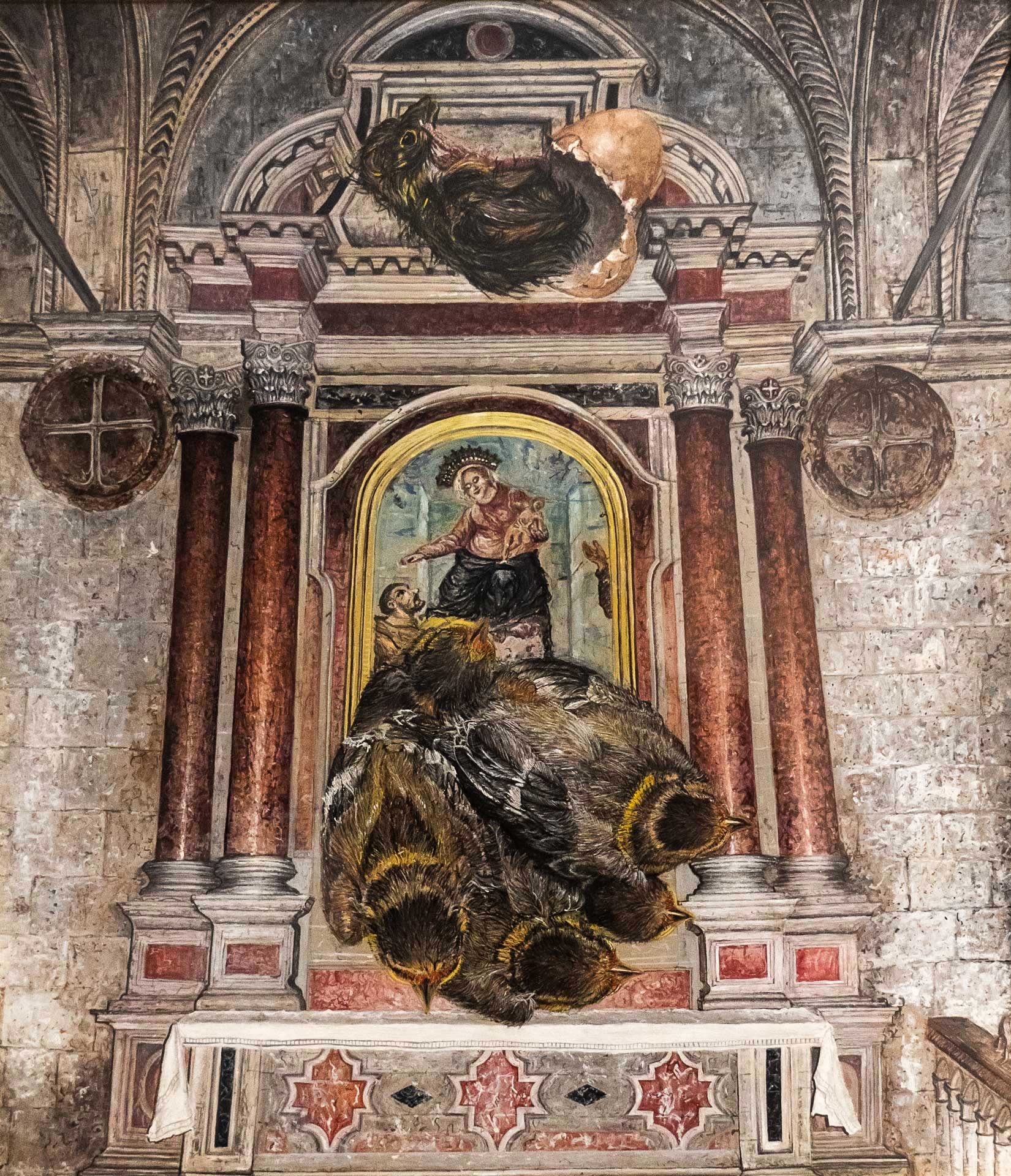
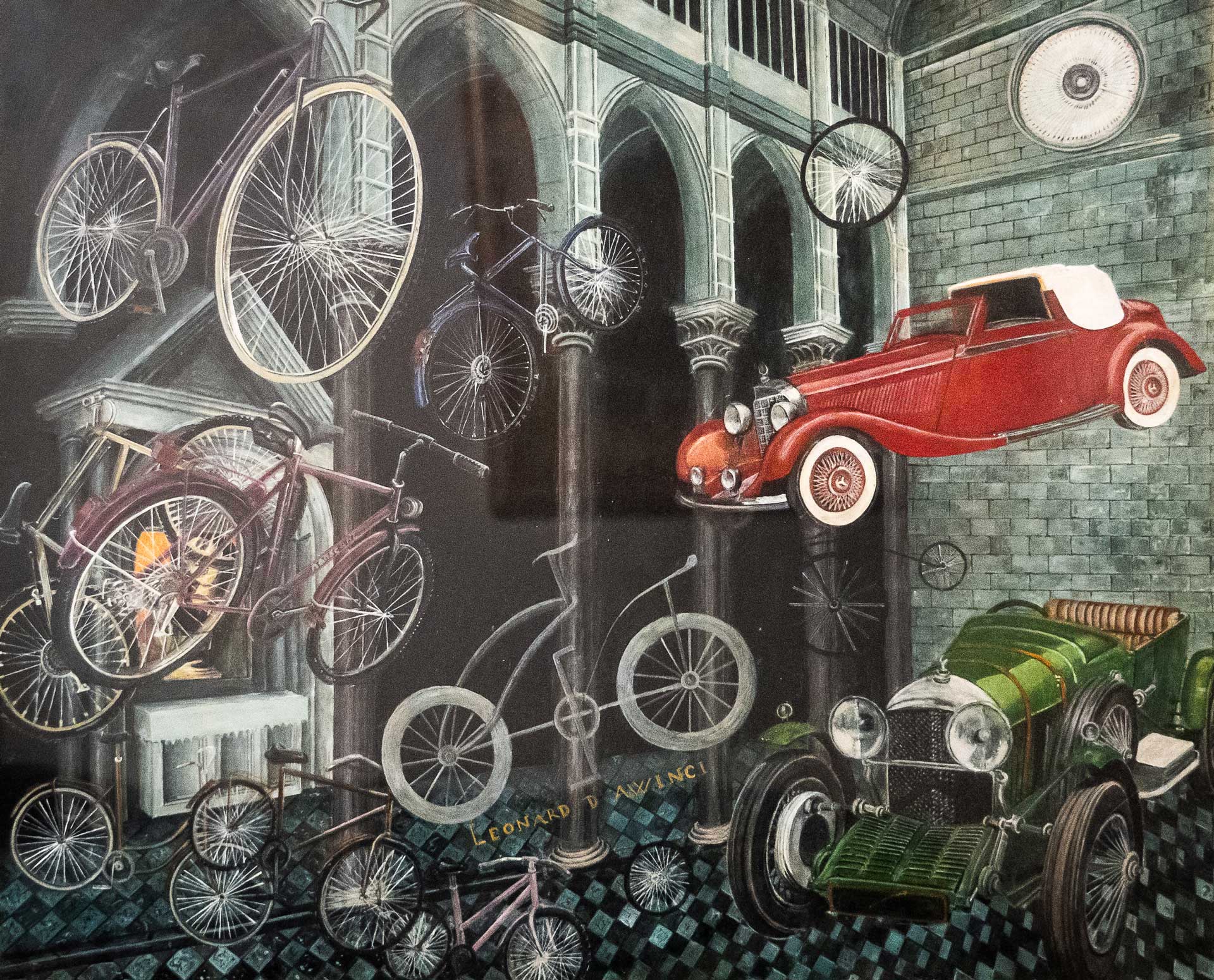
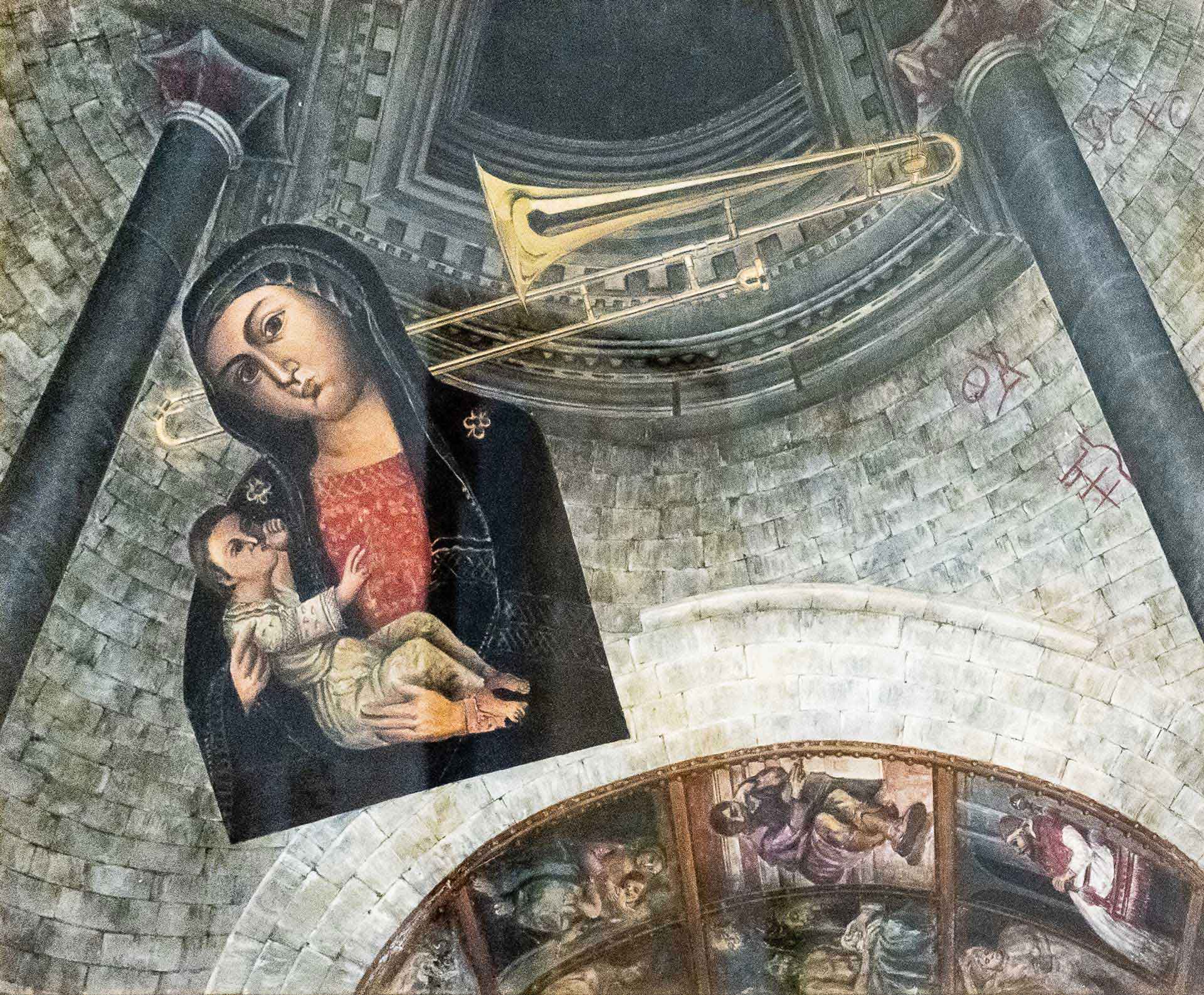
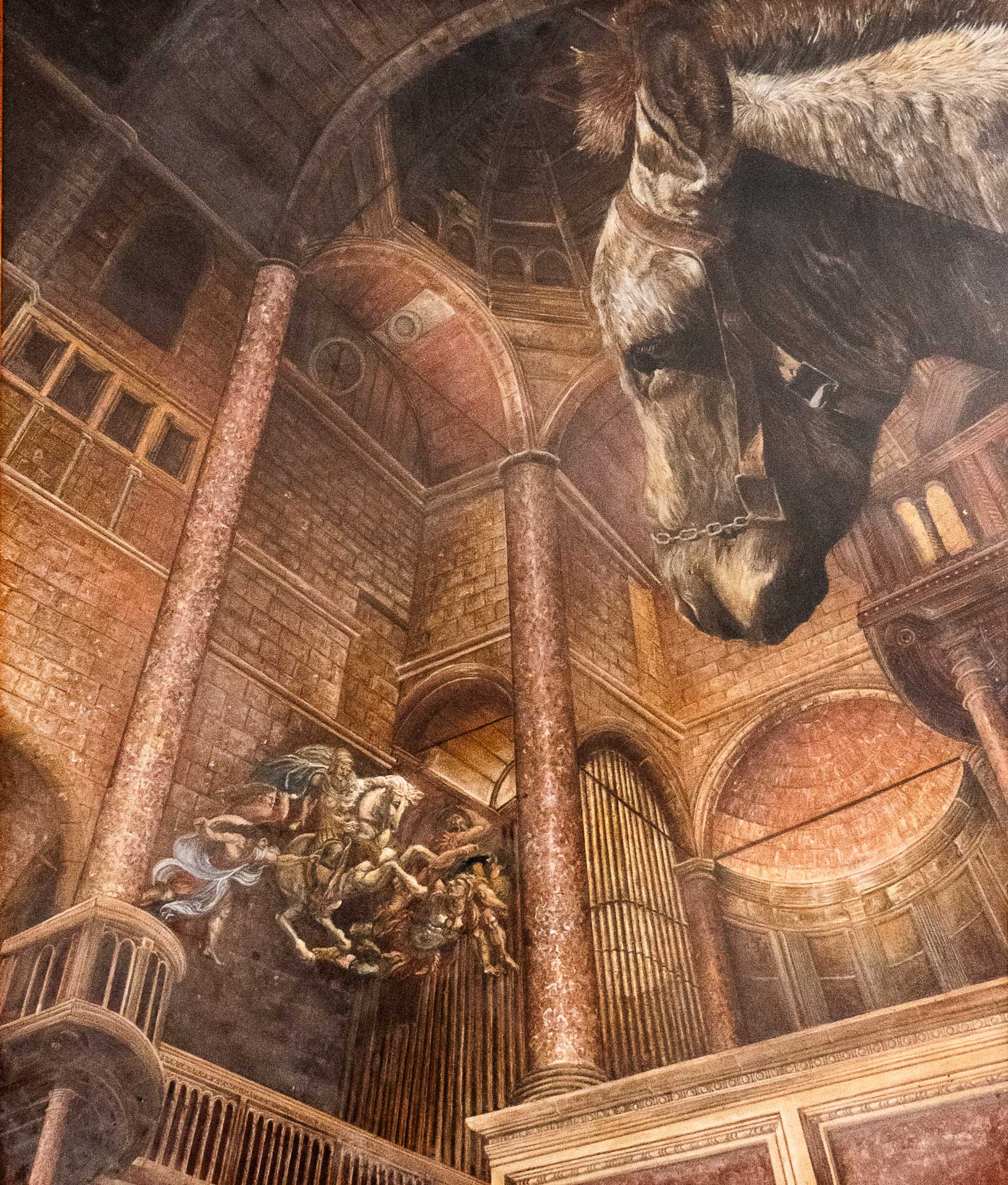
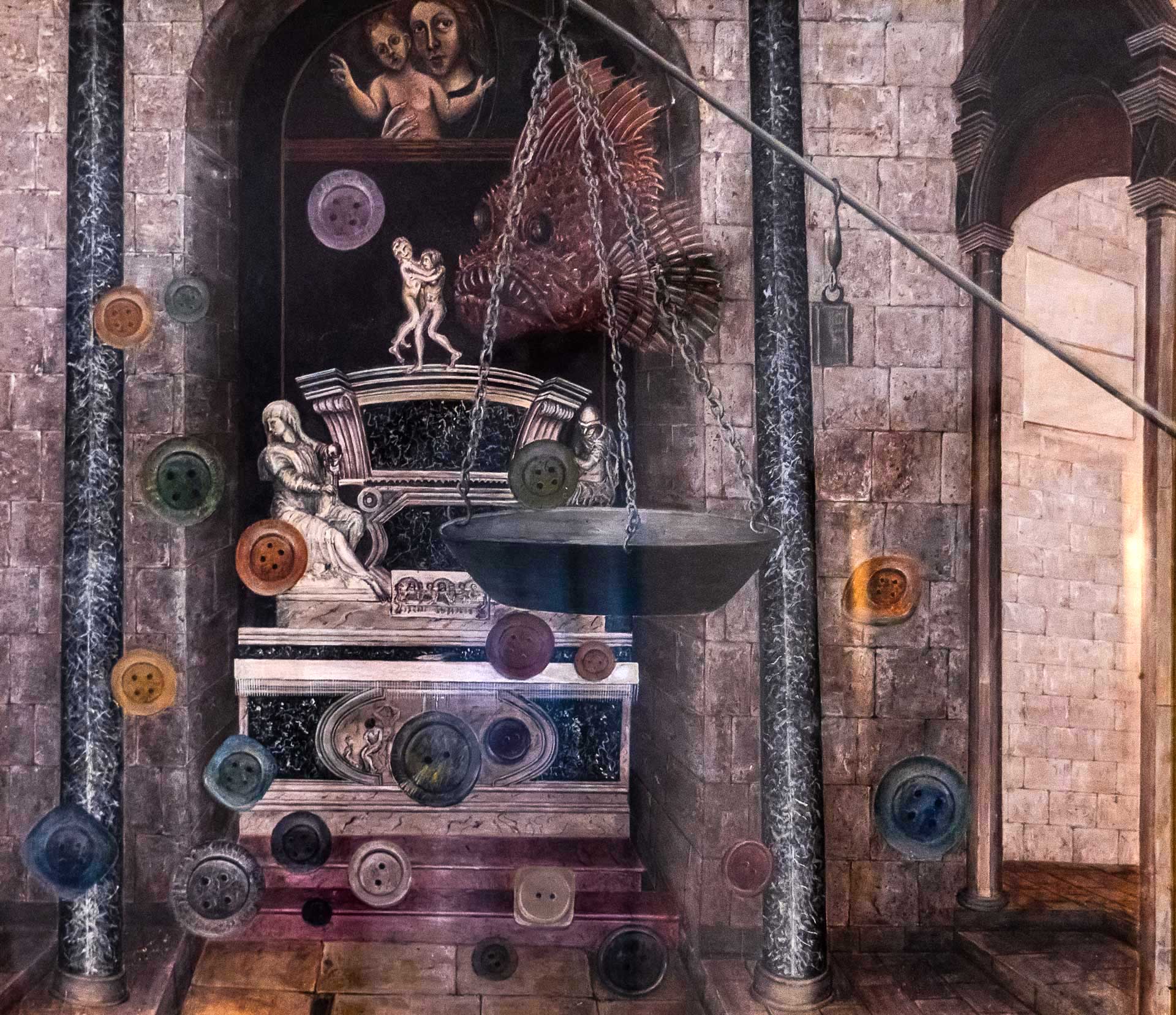
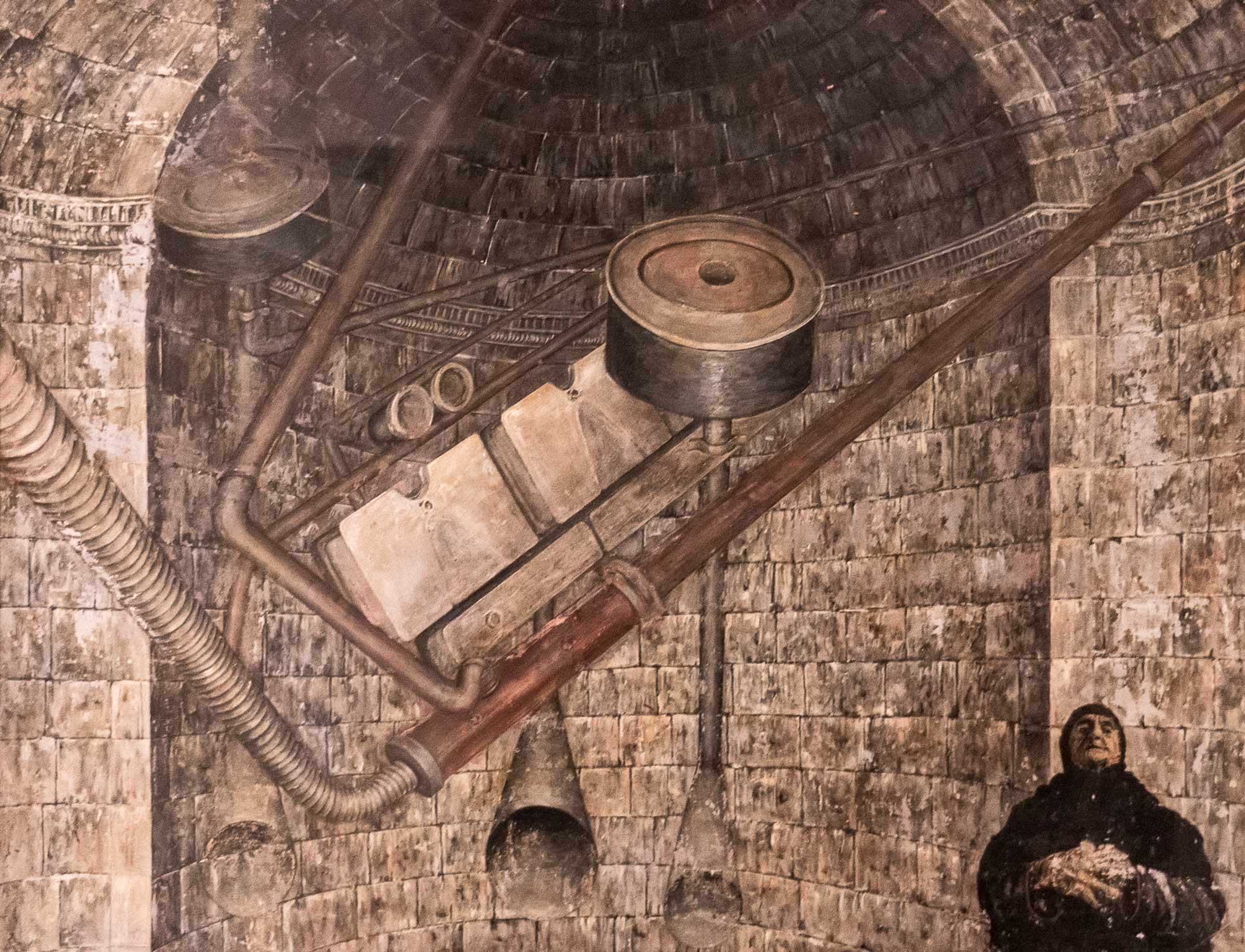
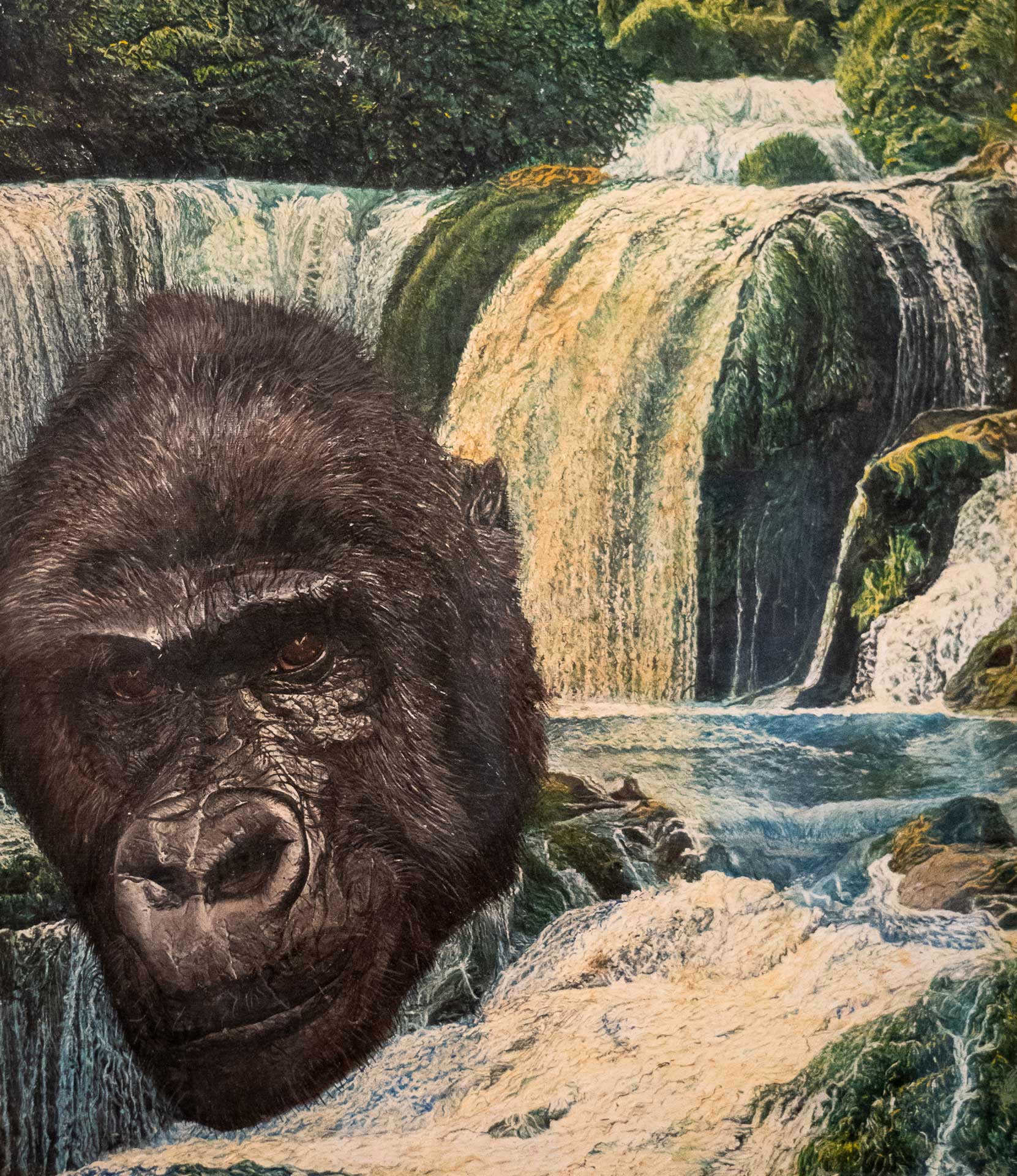
In this provocative series, Neven Tudić confronts the boundaries between sacred and profane through masterful technical execution that merges hyperrealistic painting with conceptual juxtaposition. The works appropriate the formal language of religious architecture—specifically cathedral and church interiors—as a stage for confronting philosophical questions about tradition, authority, and the place of nature within cultural hierarchies. Through the strategic insertion of animals, mechanical objects, and human elements into sacred spaces, Tudić enacts a Heideggerian “unconcealing” that reveals the constructed nature of religious iconography and its power structures.
The juxtaposition of biological elements (gorillas, fish, chicks, hands) against ecclesiastical architecture creates a dialectical tension that evokes Nietzsche’s critique of religious institutions as human constructions that have forgotten their origins. The carefully rendered animals—placed where saints or religious figures would traditionally appear—suggest a Darwinian challenge to theological anthropocentrism. This displacement doesn’t merely shock; it philosophically interrogates what Foucault would term the “epistemic rupture” between nature and culture, between the biological reality of human existence and the cultural edifices built to transcend it. Particularly striking is how the earthy textures of fur, scales, and flesh contrast with the cold stone and formal symmetry of the religious structures, creating visual metaphors for the mind/body dualism that has dominated Western philosophical thought since Descartes.


